 Masai Mara
Masai Mara Budget Safari
Group joining departures and budget camps — the cheapest way to see the Mara without cutting the game drives short.
From $450 per person
View Budget Safari
A 3-day Masai Mara safari from Nairobi is the classic first safari: two nights in the Mara, a full day of game drives, and the Big Five on your doorstep.
The 3-day Masai Mara safari is the itinerary most first-time visitors choose, and for good reason: it fits in a long weekend, keeps costs down by limiting park-fee days, and still delivers a genuine safari experience — two nights under canvas or in a lodge, an afternoon game drive on arrival, an uninterrupted full day in the reserve, and a final morning drive when predators are most active.
The drive from Nairobi takes 5–6 hours, descending the Great Rift Valley escarpment and passing through Narok town before reaching the reserve. You'll travel in either a pop-up-roof safari van or a 4x4 Land Cruiser (recommended in the rainy seasons, April–May and November, when black-cotton roads get slippery).
This schedule balances travel time with wildlife viewing rather than rushing through a checklist. Your driver-guide adjusts each drive for recent sightings, road conditions and the location of resident animals.
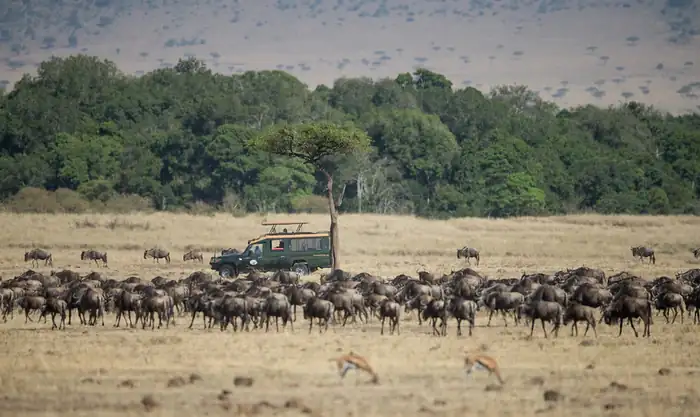
Typical landscapes include open savannah, acacia woodland and riverine habitat. That variety supports zebra, giraffe, buffalo, elephant and antelope as well as lion, leopard, cheetah and hyena.
Accommodation can be a budget tented camp, a mid-range safari camp or a lodge. The experience level changes the room, setting and service, but every quoted option includes a private sleeping space and the meals shown below.
Pick-up from your Nairobi hotel or the airport between 7:00–8:00 am. Drive south-west through the Great Rift Valley with a viewpoint stop, then through Narok town for lunch en route or at camp. Arrive at the Mara by early afternoon, check in, and head out at around 4:00 pm for your first game drive as the heat fades and animals become active. Dinner and overnight at your camp or lodge.
A full day exploring the reserve with a picnic lunch by the Mara River, where hippos and crocodiles gather. Your guide tracks lion, cheetah, elephant and — during July to October — the migration herds. Optional extras today: a sunrise hot-air balloon safari (approximately $450 per person, booked in advance) or a visit to a Maasai village (about $25–30 per person, paid locally). Dinner and overnight at your camp or lodge.
An early-morning game drive at dawn — the best hour for big cats returning from a night's hunt — followed by breakfast at camp. Depart the Mara by mid-morning and arrive back in Nairobi between 4:00 and 6:00 pm, with drop-off at your hotel or the airport. If you have an evening international flight, this itinerary connects comfortably.
The road journey follows the Nairobi–Narok route before continuing toward the gate serving your confirmed camp. Sekenani, Talek and Oloolaimutia are common access points, while the final approach depends on where you stay.
Road transfers make the changing landscape part of the trip, but the last section can be corrugated or muddy. Travellers prone to motion sickness may prefer a private vehicle, which allows more flexibility for comfort stops.
The pop-up roof provides an elevated view while everyone remains inside the vehicle. Bring binoculars if you have them; the guide also helps position the vehicle for photography without crowding wildlife.
Sightings are never guaranteed. The focus is ethical observation of wild animals, with time divided among the grasslands, seasonal watercourses and river habitat according to current conditions.
Full-board accommodation normally covers breakfast, lunch and dinner from lunch on Day 1 through breakfast on Day 3. Advise us of vegetarian, vegan, allergy or other dietary requirements before the camp is confirmed.
Drinking water is supplied in the safari vehicle. Personal drinks, premium beverages and purchases made at the lodge or camp are settled separately unless your written quote says otherwise.
Pack soft-sided luggage where possible because storage space is limited, especially on shared departures. A light layer, sun protection, closed shoes and a small day bag are useful for early starts and changing temperatures.
| Option | Low Season (Jan–Jun) | High Season (Jul–Dec) | Accommodation |
|---|---|---|---|
| Group joining — budget camp | from $450 | from $650 | Budget tented camp, en-suite |
| Private safari — budget camp | from $650 | from $850 | Budget tented camp, en-suite |
| Private safari — mid-range | from $900 | from $1,200 | Mid-range lodge/tented camp |
| Private safari — luxury | from $1,600 | from $2,200 | Luxury camp or lodge |
Prices are indicative per person sharing a double/twin, based on 2 travellers for private options, and include park fees ($100/adult/day Jan–Jun; $200 Jul–Dec). Exact price depends on dates, group size and camp availability — request a quote for an itemised figure.
A group-joining departure shares the vehicle and follows a set pickup plan. It suits solo travellers and couples who value a lower price more than a private schedule.
A private tour reserves the vehicle for your party, giving the guide more freedom to respond to your interests. Families and photographers often prefer this format.
Park fees, room availability and seasonal supplements can change the final total. We confirm each cost and the named property before asking you to book.
July–October is migration season — the Mara at its busiest and most spectacular, with wildebeest river crossings possible on your full day in the reserve. Book camps 2–3 months ahead. January–February is warm and dry with excellent resident game viewing and calving on the plains. March–May is the green season: dramatic skies, newborn animals, the lowest prices of the year, and half-price park fees — bring a rain jacket and choose a 4x4.
The Great Migration is a natural event, so arrival dates and river crossings cannot be scheduled. Resident wildlife makes the reserve rewarding throughout the year even when the large herds are elsewhere.
June and November can offer a useful balance between visitor numbers, vegetation and value. Ask about current camp locations if a particular part of the ecosystem matters to you.
If your dates fall in migration season and a river crossing is on your bucket list, consider the 4-day safari — the extra full day in the reserve roughly doubles your time near the river. Outside migration season, 3 days is enough for most travellers to see the Big Five.
Children can join, but the right vehicle setup and camp policy depend on their ages. Share each child's age when requesting a quote so we can check room occupancy and any applicable fee.
Comprehensive travel insurance is recommended for medical care, cancellation and baggage disruption. International flights and Kenya entry requirements remain the traveller's responsibility.
Tell us your dates and group size — we'll reply on WhatsApp with an itemised price and the exact camp you'd stay in.
Group joining departures and budget camps — the cheapest way to see the Mara without cutting the game drives short.
Compare 3-day, 4-day, luxury, flying and honeymoon itineraries side by side and pick the trip that fits your dates and budget.