 Masai Mara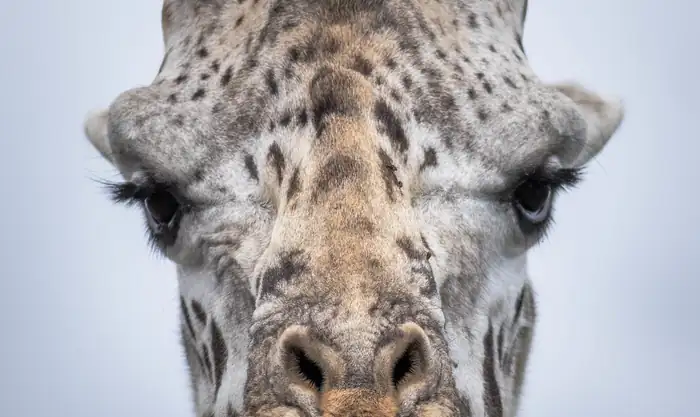
Masai Mara Budget Safari
Everything about keeping Mara costs down — budget camps, what's really included, and 7 practical ways to save.
From $450 per person
View Budget Safari
Shared departures most days from Nairobi — a maximum of 7 travellers per vehicle, every seat a window seat, and the lowest per-person price to the Mara.
A group joining safari — sometimes called a shared, seat-in-vehicle or join-in safari — is the simplest idea in Kenyan tourism: travellers who booked separately share one safari vehicle, one guide and one itinerary, and split the cost between them. You book a seat rather than a whole vehicle. On departure morning, the van collects each traveller from their Nairobi hotel in turn, and by the time you reach the Rift Valley viewpoint you are a group: perhaps a solo backpacker from Germany, a couple from Manila, two students from Nairobi and a photographer from Toronto, all headed for the same reserve.
Three rules keep the model fair. First, vehicles carry a maximum of 7 travellers — never more — so nobody is squeezed into a middle seat. Second, every seat is a window seat, and during game drives most guests stand at the shared pop-up roof anyway. Third, the schedule is fixed: departure times, game-drive hours and the return day are set in advance, which is exactly what makes the price possible. If you want to linger three extra hours at a lion sighting or change the route on a whim, that flexibility is what a private safari sells — see the comparison further down this page.
Everything else matches our standard budget packages: accommodation in permanent tented camps near the Talek and Sekenani gates, full-board meals, game drives in the Maasai Mara National Reserve itself, and park fees included in the headline price.
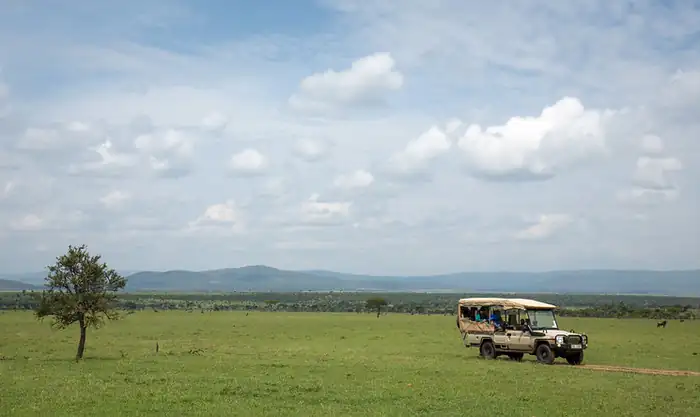
The shared vehicle is normally a safari van with a raised viewing roof. Travellers keep the same driver-guide throughout the road journey and scheduled wildlife drives.
Open savannah, acacia woodland and riverine areas support lion, elephant, buffalo, giraffe, zebra, cheetah, hyena and numerous antelope species. Wildlife sightings remain natural and cannot be guaranteed.
Seat sharing reduces transport costs without changing access to the reserve. Accommodation, vehicle type and schedule create the saving—not a separate or lower-quality wildlife area.
Group joining safaris leave Nairobi most days of the week, year-round, with extra vehicles added through the migration months of July to October. Pick-up from Nairobi hotels runs between 7:00 and 8:00 am; the exact time for your hotel is confirmed the evening before. The drive to the Mara takes 5–6 hours over roughly 250 km, with a Rift Valley viewpoint stop and a break in Narok, arriving in time for lunch and the first game drive. Return departures reach Nairobi by late afternoon on the final day, in time for evening international flights.
Because seats are sold individually, a departure is confirmed once its minimum number of travellers has booked. In practice, high-season dates fill fast and nearly always run; if you are travelling on fixed dates in the quieter months, tell us early and we will steer you to a departure that is already filling.
Pickup order depends on the hotels represented in the group. Guests staying outside the normal collection zone may be given a central meeting point or quoted a separate transfer.
Each collection can add time before leaving the city. Keep your phone available on departure morning and be ready with luggage before the confirmed pickup window.
The route descends the Great Rift Valley escarpment and passes through Narok. Comfort, viewpoint and meal stops are coordinated for the entire vehicle rather than individually.
| Package | Low Season (Jan–Jun) | High Season (Jul–Dec) | Best For |
|---|---|---|---|
| 3-day group joining safari | from $450 | from $650 | First safari, tight schedule |
| 4-day group joining safari | from $560 | from $820 | Migration season, river-crossing watch |
Prices are per person sharing a double/twin at a budget tented camp and include shared transport from Nairobi, full-board meals, all scheduled game drives and park fees ($100/adult/day Jan–Jun; $200 Jul–Dec). Full itineraries: 3-day safari · 4-day safari.
Starting prices vary with season, room occupancy, camp availability and current reserve charges. Your quotation identifies the property and every mandatory cost before payment.
The three-day option suits travellers with limited time, while four days provides a second full day for slower exploration. July through October usually carries higher fees and stronger demand.
Solo guests buy one vehicle seat at the published per-person rate. A separate room supplement may apply, but it is an accommodation charge rather than a transport surcharge.
Permanent tented camps usually provide bedding, mosquito nets, an en-suite bathroom and scheduled hot water. Electricity and charging hours vary by property.
Full-board meals run from lunch on arrival day through breakfast on departure day. Picnic lunches may be packed when the group remains inside the reserve.
Vegetarian, vegan and allergy-related meals can generally be arranged with advance notice. Dietary requirements should be supplied before the camp is confirmed.
Pack soft-sided luggage because storage is shared. A light jacket, sun protection, closed shoes, binoculars and a small day bag are practical additions.
Group joining is built for solo travellers (the per-seat model means no vehicle supplement), students and backpackers stretching a budget, and couples who would rather put the savings towards a balloon flight or an extra park day. It also suits anyone who enjoys company: a shared vehicle full of strangers on Day 1 is usually a WhatsApp group of friends by Day 3, and many guests count the mix of nationalities among the trip's highlights.
Go private instead if you want control of the clock — private vehicles can wait hours at a single sighting, leave earlier, or return later. Private also makes sense for families with young children who need their own space and pace, for photographers carrying long lenses who want an empty row to shoot from, and for anyone marking a honeymoon or milestone. The premium is roughly $200 per person on a 3-day trip; your quote can show both options side by side.
You pay the same seat price as everyone else — there is no vehicle supplement for travelling alone. The one cost to watch is accommodation: some camps charge a single-room supplement in high season (July–December). Travelling in low season, or telling us you are happy to share a same-sex twin room, usually removes it. Whatever applies to your dates is itemised in your quote before you pay anything.
Shared travel works best when everyone respects agreed departure times and keeps personal equipment within their allocated space. Large camera cases should be declared before booking.
Window access is available to every passenger, but the pop-up roof is a communal viewing area. Guides help rotate positions when one side has the better sighting.
Families should provide children's ages because room policies and child rates differ between camps. A private arrangement may be more comfortable for very young travellers.
The Great Migration usually reaches the wider Mara ecosystem between July and October, but herd movement and river crossings follow rainfall rather than a fixed timetable.
Resident wildlife makes other months worthwhile, and the green season can offer fewer vehicles and dramatic landscapes. Comprehensive travel insurance is recommended year-round.
Tell us your dates and how many seats you need — we'll reply on WhatsApp with the next confirmed departures and an itemised price.
Related reading: what a Masai Mara safari costs.
Everything about keeping Mara costs down — budget camps, what's really included, and 7 practical ways to save.
The migration-season itinerary — an extra full day in the Mara River sector for the river-crossing watch.