★Hotel, JKIA & Wilson Pickups • Masai Mara Safaris from Nairobi
Masai Mara Safari from Nairobi: Road & Fly-In Packages
Book a Masai Mara Safari from Nairobi—compare 1 to 8-day Masai Mara safari packages from Nairobi by road (265–280 km, 5–6 hrs) or Wilson flight (45–60 mins) with itemised 2026 prices.
TRA Licensed OperatorAMREF Flying Doctors CoverKPSGA-Certified Guides100% Transparent Park Fees
Road and Fly-In Masai Mara Safari Packages from Nairobi
Compare Masai Mara safaris starting from Nairobi—our best Masai Mara safari packages from Nairobi 2026 cover 1 to 8 days for your Masai Mara safari in Kenya from Nairobi.
Masai Mara Safaris That Start from Nairobi by Duration
1–2 Days • Express
1-Day Fly-In & 2-Day Mara Safari
Book a 1-day fly-in Mara safari with 6 hours game viewing ($680 pp; 1 day Mara fly-in safari) or a 2-day 1-night Masai Mara road safari from Nairobi ($350 pp; Masai Mara Fly-In Safari).
Every Masai Mara safari tour from Nairobi sold on this page is itemised: vehicle, park fee, camp and transfers appear as separate lines, so two quotes can be compared line by line rather than by headline price.
Nairobi to Masai Mara: Distance by Road vs Flight
Plan your Masai Mara safari by road or fly-in: take the 265–280 km (5–6 hr) drive from Nairobi to Maasai Mara safari via Narok to Sekenani Gate, or a 45–60 min fly-in Masai Mara safari from Wilson Airport.
Road • 265–280 km (5–6 Hrs)
Nairobi to Masai Mara with Return Transfers
A safari from Nairobi to Masai Mara with return road transfers covers 265–280 km (5–6 hrs) via the Rift Valley and Narok to Sekenani Gate (western Triangle gates reach 380–420 km — route map).
Air • 45–60 Mins
Masai Mara Fly-In Safari from Wilson Airport
Fly 45–60 minutes from Wilson Airport (15 kg soft bag) to Keekorok, Ol Kiombo, Musiara, or Naboisho airstrips where a camp 4x4 meets your plane (fly-in packages).
Masai Mara Safaris from Nairobi: Which Duration Fits?
Four duration options cover almost every Nairobi to Masai Mara safari. A one-day fly-in gives you six hours in the reserve and a return to the city by evening; a two-day road safari adds a night in camp and a second dawn drive; three days is the shortest trip that does not feel rushed; and four to five days allows a second camp, a balloon flight or a conservancy stay without cutting anything out.
For a first visit, three days is the sensible minimum. You lose roughly ten hours to transfers on any road departure, so a two-night trip delivers only about six hours of game viewing inside the reserve. A third night doubles that, and it is the difference between seeing the Mara and spending time in it. Couples adding a coast extension usually hold at three nights and put the extra days on the beach.
Longer itineraries pay off in a different way. Four days lets you split the stay between the reserve and a conservancy, which changes both the rules and the crowds; five days or more lets you add a second region such as Amboseli or Lake Nakuru without a punishing drive. If your dates are fixed by a flight, work backwards from the international arrival rather than the safari, and leave a night in Nairobi at the start.
The choice between road and air is largely a choice about luggage. A Masai Mara fly-in safari from Nairobi limits you to fifteen kilos in a soft bag, while the road vehicle takes everything, which is why families and photographers usually drive one way and fly the other.
Safari Costs: Shared Road Trips vs. Wilson Airport Flights
Reconciling Masai Mara safari cost per person per day: a budget Masai Mara safari at $150 to $350 per day totals $450 to $1,050 for 3 days, while a mid-range Masai Mara safari $900 to $1,500 for 3 to 4 days includes a private 4x4. Compare Masai Mara safari estimated cost for 3, 5 and 7 days below.
The four tiers differ in vehicle, camp and park fee rather than in the animals. A budget group road departure runs from $150 to $350 per person per day, which is $450 to $1,050 for three days plus the park fee; a mid-range private 4x4 safari typically lands between $900 and $1,500 per person for three days; a fly-in safari from Wilson Airport adds the flight and starts around $1,400; and a luxury conservancy departure begins near $2,850 per person for three days.
Two lines decide whether a quote is honest. The first is the park fee: $100 per adult per day from January to June and $200 from July to December, quoted either inside or outside the headline figure. The second is the vehicle: a shared Land Cruiser and a private one can carry the same itinerary and differ by several hundred dollars. Ask which is which before comparing totals, and ask for the exclusions in writing.
It also helps to know what does not move. Changing the camp within a tier shifts the price by a few hundred dollars; moving the dates by a week can shift it by more, because the fee steps up on 1 July and the camps raise their migration rates at the same moment. A late-June departure is the cheapest week of the peak season and the animals are already in the reserve.
Prices are quoted per person sharing, and the tier you pick moves the total far more than the season. A budget Masai Mara safari and a luxury Masai Mara safari can share the same dates, the same gate and the same guide and still differ by a factor of five.
Nairobi Departure Day: How It Works
Every Masai Mara safari departing Nairobi and guided Masai Mara safari includes morning collection from Nairobi hotels or airports.
07:00–08:00 AM
Nairobi Hotel Pickups
Road tours collect from CBD, Westlands, Kilimani, and Upper Hill hotels (07:00–08:00), arriving in the Mara for lunch (itinerary | Masai Mara Group Joining Safari).Shared-seat departures are listed under Masai Mara Shared Safari.
JKIA Arrivals
Jomo Kenyatta Airport (JKIA)
Landing before 06:30? We meet you at JKIA for direct departure on our Masai Mara safari tours from Nairobi (pickup | Masai Mara Safety).Arrival logistics sit alongside the wider question of is the Masai Mara safe.
Collections run from six in the morning, and the driver calls the evening before to confirm the hotel entrance. If you are staying outside the usual Westlands and Kilimani circuit, say so when you book: a Masai Mara safari packages departing Nairobi quote built for a city-centre hotel will not automatically include a Karen pickup.
Masai Mara Park Fees, Gates and Inclusions
Always check if park fees are bundled into your Masai Mara quote. We issue every Masai Mara safari with park entry fees included and itemised.
Permits
Masai Mara Safari Package Including Park Fees and Game Drives
Each Masai Mara safari package including park fees and game drives specifies 24-hour Narok permits ($100/day Jan–Jun; $200/day Jul–Dec — Masai Mara Park Fees).All current rates are confirmed in Masai Mara Park Entry Fees 2026.
Full-Board
3-Day Masai Mara Safari with Meals and Accommodation Included
Book a 3-day Masai Mara safari with meals and accommodation included plus a Masai Mara safari with picnic lunch and transfers (3 Day Masai Mara Safari).
Included
Return Nairobi road transfers (4x4 Cruiser or van) or Wilson flights
En-suite camp/lodge with full-board meals & drinking water
Itemised Maasai Mara National Reserve or conservancy permits
Game drives & Nairobi hotel/JKIA pickup
Optional & Excluded
Masai Mara hot air balloon safari from Nairobi $460 per person ($450–$500 pp)
Maasai village visit ($25–$30 pp) & pre-safari Nairobi hotel
International flights, Kenya eTA ($35), bar drinks & tips ($10–$15/day)
The Narok permit is the one line that cannot be discounted. It is $100 per adult per day from January to June and $200 from July to December, and it is charged per day inside the reserve rather than per night, which is why a 2 day Masai Mara safari and a three-day trip differ by more than one night's accommodation.
Masai Mara 4x4 Jeep Safaris from Nairobi & Multi-Park Extensions
Compare Masai Mara 4x4 jeep safaris from Nairobi—from a group joining Masai Mara safari to a private Masai Mara safari with own guide.
4x4 vs Van
4x4 Jeep Safari with Pop Roof
Book a Masai Mara 4x4 jeep safari from Nairobi with pop roof or a budget Masai Mara safari by road (group joining safari | budget Masai Mara safari).
Our 2 days 1 night Masai Mara safari starting from Nairobi ($350 pp) runs Saturday to Sunday (safari package rates | 3-day Masai Mara safari).
Multi-Park
Amboseli, Samburu, Lake Nakuru & Tsavo
Combine the Mara with Nakuru, Amboseli, Diani Beach, or cross-border Kenya Wildlife Migration. Seasonal wildlife patterns are detailed in our Masai Mara Migration Guide.
Masai Mara Safaris from Nairobi — Vehicles, Camps & Wildlife Gallery
Ready to book a Masai Mara safari? Browse our verified fleet and packages below.
Vehicle choice is where most of the value sits. A shared Land Cruiser is comfortable and sociable; a private one lets the guide follow a fresh track, wait for a cheetah to move and stop when the light is right, and it is the upgrade we recommend before any other.
Big Five Wildlife Viewing & Great Migration Highlights from Nairobi
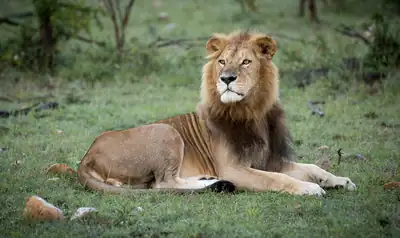
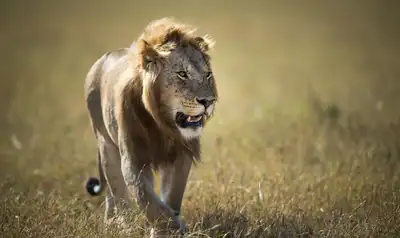
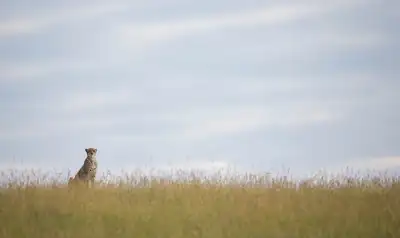
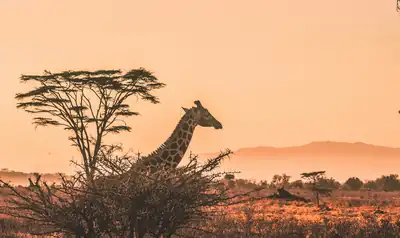
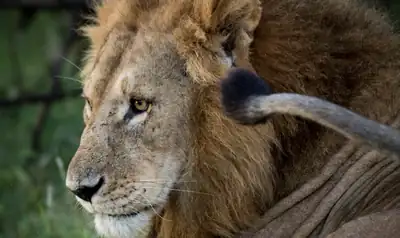
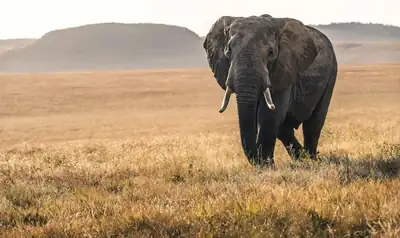
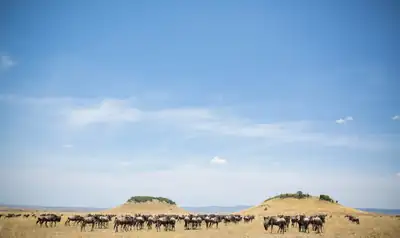
Embarking on a guided Masai Mara safari allows travelers to encounter the world famous Great Migration and the iconic African Big Five. A private guide on these Masai Mara safaris from Nairobi navigates the reserve to locate majestic lion prides, magnificent African elephant herds, swift cheetah predators stalking across open savannah plains, Cape buffalo, and elusive leopards.
The difference between seeing the Big Five and seeing them well comes down to the guide and the vehicle. A private Land Cruiser can leave the main circuit when a leopard is reported in a ravine, wait twenty minutes for a cheetah to stand, and position for the light rather than the crowd. Shared departures from Nairobi are cheaper and perfectly comfortable, but they follow a schedule, and on a two-night trip that schedule decides what you see.
Timing matters as much as luck. The first hour after sunrise and the last hour before dark are when the cats move, which is why every itinerary built around a Nairobi departure protects those two windows. If your flight lands in the middle of the day, consider a night in the city and an early start rather than a rushed transfer; the difference in the first morning is worth more than the room rate.
Masai Mara Safari Lodges: Budget, Mid-Range and Luxury
Whether choosing budget camping, mid range safari lodges, or exclusive tented camps, visitors enjoy comfortable wilderness accommodation located deep inside wildlife corridors. Popular options include Mara Serena Lodge perched high on a ridge with panoramic Mara River views, Basecamp Masai Mara along the Talek River, Sarova Mara Game Camp, and intimate private conservancy retreats. Every camp experience provides en-suite safari suites, freshly prepared gourmet meals, and thrilling sunrise game drives.
The tier you choose changes the price far more than the wildlife. A budget group departure from Nairobi uses a permanent tented camp outside the reserve with shared bathrooms and a shared vehicle; a mid-range 4x4 safari uses an en-suite tent or lodge room with two game drives a day; and a luxury departure moves into a private conservancy where the vehicle is yours and the camp holds a dozen guests at most.
Location is the other variable. A camp on the Talek River is minutes from the central plains and the big-cat territories, while a conservancy camp on the northern boundary trades the reserve's density for walking safaris, night drives and far fewer vehicles. Both are good choices, and the right one depends on whether this is your first safari or your fifth.
Masai Mara Safari: Best Time of Year
The Masai Mara is an exceptional year-round wildlife destination. July through October features the world-renowned wildebeest migration crossing the Mara River, while December through March offers superb predator viewing, lush green scenery, and clear photographic lighting across the game reserve. Low season between April and May allows visitors to use special discount packages starting from $770 per person for an all-inclusive 3-day itinerary.
The park fee is the one cost that moves with the calendar rather than the market. Narok County charges $100 per adult per day from January to June and $200 from July to December, so the same three-day itinerary carries $300 more per person in the second half of the year before anything else changes. A late-June departure therefore pays the low-season fee and often a lower room rate for the same reserve and the same animals.
Rain is less of an obstacle than the brochures suggest. The long rains in April and May arrive as heavy afternoon storms with clear mornings, and the green season that follows is the best light of the year for photography. What the rains do affect is the last stretch of road to Sekenani, which is one more argument for a 4x4 or a fly-in departure from Wilson Airport.
Hub Logistics
Nairobi to Masai Mara Departure Hubs: JKIA Airport, Wilson Airport & Hotel Pickups
Seamless door-to-door departure logistics whether arriving internationally into Jomo Kenyatta International Airport or boarding safari flights at Wilson Airport.
Nairobi Wilson Airport Fly-In Terminal
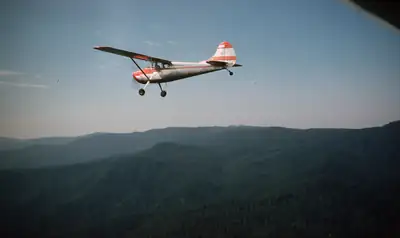
Scheduled morning safari flights depart Wilson Airport (WIL) directly to Musiara, Serena, Keekorok, and Olkiombo airstrips, landing in the heart of the Mara within forty-five minutes. Learn more about our flying safari packages.
Complimentary Hotel Transfers
Private driver-guides pick up guests from any Nairobi city hotel, Westlands apartment, or international terminal at JKIA by 06:00 AM, avoiding urban commuter traffic. Check out our 3-day Masai Mara safari itinerary.
Scenic Escarpment Descent
Overland road itineraries travel via the scenic Nairobi-Mai Mahiu highway, pausing at the Great Rift Valley viewpoint for panoramic photographs before descending toward Narok town. Explore our 4-day Masai Mara safari options.
Whichever hub you use, the arithmetic is the same: a Nairobi Masai Mara safari packages booking covers the transfer from the terminal to the aircraft or the vehicle, and nothing is added at the door. Confirm the pickup point in writing and the day starts on time.
Vehicle Standards
Nairobi 4x4 Fleet and Road Conditions via Narok
Engineered for comfort and rugged endurance across 280 kilometers of paved highways and rough black-cotton savannah tracks.
Nairobi 4x4 Land Cruiser Engineering
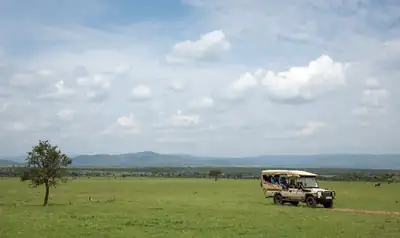
Every private overland safari utilizes high-clearance 4x4 Toyota Land Cruisers fitted with pop-up photographic roofs, heavy-duty suspension, long-range VHF radios, and dual spare tires. Compare vehicles in our luxury safari guide.
Onboard Comfort & Charging Tech
Stay powered on full-day game drives with individual 220V inverter charging sockets, USB camera plugs, electric onboard refrigerator cooler boxes, and emergency first-aid equipment. Read our essential what to pack guide.
Highway & Gate Tarmac
The road from Nairobi to Narok town is smooth asphalt (2.5 hours), while the remaining stretch to Sekenani Gate is fully paved, cutting overland travel time down to five comfortable hours. Review detailed safari cost breakdown.
Masai Mara Road Transfer: Do You Need a 4x4?
In the dry months a saloon car will physically reach Sekenani. It is still the wrong vehicle. The reserve tracks are rutted, the black-cotton soil holds water for days after rain, and a low-clearance car cannot follow a guide off the main circuit when a leopard moves into a ravine. A 4x4 is not a luxury on this route; it is the difference between a schedule and a plan.
The same logic applies to the vehicle's fittings. A pop-up roof is not cosmetic: it lets four people stand and photograph without blocking each other, and it keeps the vehicle cooler in the middle of the day. Charging sockets, a fridge box and a spare tyre matter more than leather seats, and any operator who cannot name the vehicle they are sending has not thought about the drive.
Cross-Border Safaris
Nairobi to Serengeti: Combined Kenya and Tanzania Itineraries
Experience the complete Serengeti-Mara ecosystem with cross-border Kenya safari itineraries connecting the premier national parks of East Africa.
Masai Mara and Serengeti Migration Circuit
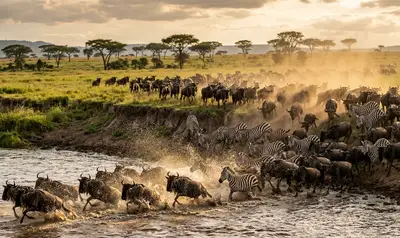
Our combined Kenya Tanzania itineraries link the Masai Mara with Tanzania's Serengeti National Park and Ngorongoro Crater, following the wildebeest herds across international borders. Discover Great Migration timing.
Border Crossing Logistics
Travelers connect smoothly between Kenya safari itineraries and northern Tanzania via scheduled bush flights to Migori airstrip followed by a quick border crossing at Isebania. Compare ecosystems in our Masai Mara vs Serengeti.
Multi-Park Safari Itineraries
Extend your Nairobi safari package to encompass Amboseli National Park for views of Mount Kilimanjaro, Lake Nakuru for rhinos, and Samburu National Reserve for rare northern species. View our budget safari options.
Bush Flight Hubs
Masai Mara Bush Airstrips & Direct Flight Connections from Nairobi Wilson
Strategically positioned airstrips providing immediate access to luxury tented camps and private conservancies.
Masai Mara Southern Airstrips: Keekorok
Keekorok airstrip is the oldest in the reserve, serving visitors heading to southern tented lodges, the Sand River crossing zones, and the Keekorok hippo sanctuary pools.
Swamp & Marsh Pride Zone
Musiara airstrip places guests right on the doorstep of the famous Marsh Pride territory, offering instant access to Governors' Camp, Little Governors', and Sanctuary Olonana.
Central Plains Airstrip
Located in the heart of the reserve, Olkiombo airstrip provides short transfers to camps along the Talek River and the lush central big-cat savannah grasslands.
Masai Mara Serena Airstrip and Mara Triangle
Conveniently situated on the western bank of the Mara River, Serena airstrip serves Mara Serena Safari Lodge and visitors exploring the scenic Mara Triangle conservation sector.
Northern Conservancy Airstrips
Private airstrips inside community conservancies allow travelers to bypass national reserve gates, landing straight into secluded wildlife concessions with exclusive night game drives.
Western Escarpment Airstrips
Perched near the western boundary, these all-weather hardtop airstrips serve high-end luxury lodges with panoramic views overlooking the Great Rift Valley escarpment.
Nairobi to Masai Mara Safari: Airstrip by Camp
Your camp decides your airstrip, and your airstrip decides your transfer. Guests heading to Governors', Little Governors' or Sanctuary Olonana land at Musiara and are in camp within twenty minutes; camps along the Talek and the central plains use Olkiombo; southern lodges, the Sand River crossings and the Keekorok hippo pools are served by Keekorok; and the Mara Triangle and Mara Serena use the Serena strip on the western bank.
Conservancy camps work differently. Mara North, Naboisho and Olare Motorogi have their own strips, which means you skip the reserve gate entirely and land inside the conservancy. The flight is the same forty-five minutes, the luggage limit is the same fifteen kilos in a soft bag, and the difference is that the first game drive starts before you have finished your welcome drink.
Ask for the airstrip code on your ticket. Two camps that look close together on a map can sit forty minutes apart from their respective strips, and a 3 day Masai Mara safari that lands at the wrong one loses the first afternoon drive.
Pre-Safari Stays
Recommended Pre-Safari Hotels in Nairobi for Seamless Morning Pickups
Stay close to airport departure terminals or relax in leafy residential suburbs prior to commencing your Masai Mara safari.
Nairobi Serena Hotel
Centrally located five-star luxury hotel surrounded by lush gardens, offering excellent dining, heated pool, and rapid transit access to Wilson Airport.
Hemingways in Karen
A tranquil boutique plantation-style hotel situated in leafy Karen, ideal for travelers visiting the Giraffe Centre and Daphne Sheldrick Elephant Orphanage before heading to the Mara.
Airport Terminal Hotel
Positioned inside the JKIA international airport complex with complimentary 24/7 terminal shuttles, soundproof rooms, and early morning breakfast for quick departures. If you are arriving on a night flight, the terminal hotel is the pragmatic choice even at a premium: no transfer, no traffic and no risk of a six o'clock pickup that never arrives. If you have a day to spare, Karen is the better stay, because the Giraffe Centre and the elephant orphanage are ten minutes away and the drive to Wilson the next morning is short. Wherever you stay, confirm the pickup time in writing. A hotel that promises a six o'clock collection and delivers at seven costs you the first game drive, and the camps do not hold lunch indefinitely. The three properties above are chosen because they have done this hundreds of times and understand that a safari morning starts before the kitchen does.
Browse Popular Masai Mara Safari Itineraries Departing Nairobi
What the five-hour drive actually looks like, and where the time goes.
Every Masai Mara road safari from Nairobi follows roughly 225 kilometres of highway to Sekenani Gate, and most vehicles take five to six hours including stops. You leave the city on the Naivasha road, climb through Limuru into the highland tea country, and drop down the escarpment at Mai Mahiu into the Great Rift Valley. The viewpoint there is the first proper stop, and worth ten minutes: the valley floor opens below you and the road you are about to drive is visible for miles.
From the valley floor the road runs past Naivasha and then turns west towards Narok, through wheat and barley country with Maasai settlements along the way. Narok is the last town of any size, and the practical stop: fuel, an ATM, a supermarket, and a chance to stretch. The road beyond Narok has been rebuilt in stages, so the surface varies from good tarmac to rough patches and gravel; the final stretch to Sekenani is the slowest part of the trip, and after rain it can be slow indeed.
Arrival at the gate takes a few minutes of paperwork and fee checks, and then you are inside the reserve with the roof up and the first game drive of the trip beginning before you reach camp. That is the compensation for the road: the drive in is not wasted time, it is the start of the safari. Two practical notes for the road. The Rift Valley viewpoint is the only stop with proper facilities, so use it; and the last stretch after Narok is where a slow vehicle loses an hour, which is why the departure time matters more than the vehicle's age. If you are prone to motion sickness, take the front seat and ask the driver to keep the windows open on the escarpment descent.
Nairobi Day Add-Ons: Naivasha, Nakuru and Hell's Gate
How to use an extra day in Nairobi without wasting it.
If you have a spare day before or after the safari, the Rift Valley lakes are the easiest excursion. Lake Naivasha is about ninety kilometres from the city; a boat trip past hippos, a walk on Crescent Island and a visit to Hell's Gate National Park, where you can cycle among zebra and giraffe, make a full day without the long drive to the Mara.
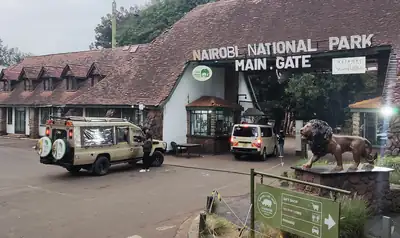
Lake Nakuru is further, roughly two and a half hours, and worth it for rhino and the viewpoints above the lake. Nairobi National Park sits within sight of the skyline and is a genuine half-day option if your flight leaves in the evening: lions in the morning, lunch in the city, airport by three. The giraffe centre and the elephant orphanage at Sheldrick are the other easy visits, and the Karen Blixen museum suits anyone who has read the book.
The point of an extra day is to arrive at the safari rested rather than wrecked. A long-haul flight followed by a five-hour drive is a hard start; a night in Nairobi followed by an early departure is a better one, and the same day can double as a gentle introduction to Kenyan wildlife. Book the extra day before the safari rather than after it. Arriving at the Mara already acclimatised means the first morning is a game drive rather than a recovery, and a short afternoon in Nairobi National Park is a low-risk way to see rhino and lion before the long drive. Keep the day light: two activities, an early dinner and an early night is the right shape.
Nairobi Safari for Solo, Couple or Family
How group size changes the price, the vehicle and the day.
A solo traveller has two sensible choices from Nairobi: a shared departure, where you join a group and split the vehicle cost, or a private safari with a single supplement. The shared option is cheaper and sociable, and most solo visitors prefer it; the private option is quieter and lets you decide when to stop. Ask what the single supplement is before you compare, because it is the figure that decides whether private is affordable.
Couples usually prefer a private vehicle and often a smaller camp, and the cost per person falls as soon as you are two. Families with children should check the ages policy before booking: many camps set a minimum age for walking safaris and balloon flights, and some offer reduced rates for children sharing a room. A private vehicle is worth the extra for a family, because you can leave when the youngest has had enough and stop when someone needs a break.
Groups of four to six get the best value of all, filling a Land Cruiser and sharing the guide. If you are travelling with friends, book early in peak season, decide the itinerary before you compare prices, and agree on the start time. It sounds trivial, and it is the difference between a smooth departure and a morning spent waiting for someone who is still at breakfast. Solo travellers should also ask about the single supplement before falling in love with a camp. Some lodges waive it in low season, some charge fifty per cent and a few charge the full double rate, which changes the arithmetic completely. Families should ask about interconnecting tents and whether the camp can provide a shorter drive for younger children without splitting the group.
Masai Mara Wildlife on the Drive and in the Reserve
What you may see before you reach the gate, and what waits inside.
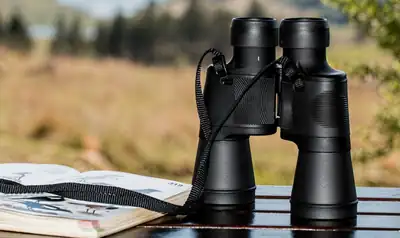
The drive itself is not a wildlife experience, but it has its moments: raptors on the fence posts, ostriches in the wheat fields near Narok, and the first giraffe or zebra as you cross into the conservancy land. Birders should keep binoculars within reach, because the roadside birds change with the altitude and the habitat.
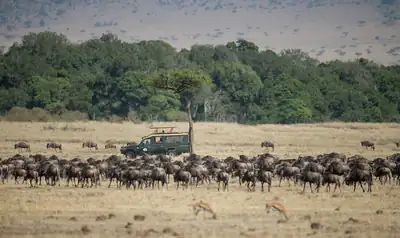
Inside the reserve, the concentration of animals is the reason people come. Elephants in family herds, buffalo in the swamp, lions and cheetahs on the plains, and the smaller species that fill the gaps. Photography is best in the first and last hour, and a guide who understands light will position the vehicle rather than chasing the radio. The countryside around the reserve is beautiful in its own right, and the escarpment views on the way in are worth the window seat.
A few things are worth remembering before you book. Ask for the departure time in writing, confirm the ticket and the dates, and check that your passport is valid for the trip. If you are unsure about anything, ask us; it is easier to answer a question now than to fix a problem at the gate. We hope the trip is wonderful, and we will help with whatever you need to arrange, from a second night in Nairobi to a balloon flight on the final morning. If you are still deciding, start with the dates and the duration, then choose the vehicle, then the camp. Couples who begin with a camp often find their dates gone, and travellers who begin with a flight often find the best camps full for the week they booked. A short call with us will usually settle the order of decisions faster than a week of comparing quotes.
Travellers who book early get the best rates and the widest choice of camps; those who book late can still be accommodated, but the choice is narrower and the price is usually higher. Either way the trip is an amazing experience, and most guests describe the drive, the camp and the reserve as an epic combination that is hard to match anywhere. That is also why we publish the driving times, the fee structure and the camp names rather than a single headline price. A safari from Nairobi is a simple product once the parts are visible, and the parts are what you should be comparing. We are happy to assist with arrangements and to recommend a property that fits, and if you would prefer to proceed with a second option we will quote that as well. Whichever you choose, the first view of the open plains is one of those perfect moments that makes the early start worthwhile, and it is why so many visitors come back to the same camp year after year. We keep the same drivers on the same routes year after year for that reason: a guide who has worked the Sekenani road for a decade knows which corner floods, which fuel station is reliable and which gate is quickest on a Sunday. That kind of knowledge does not appear in a brochure, and it is the main reason guests rebook rather than shop around.
If you have time for only one park, this is the one. If you have time for two, add Amboseli for elephants under Kilimanjaro or Nakuru for rhino. Either way, the wildlife will be the part you remember, and the drive from Nairobi is simply the price of getting there. Birders should bring a checklist rather than a heavy field guide. The roadside species change with altitude, and the swamps inside the reserve hold species that are hard to see anywhere else in Kenya. A guide who knows calls will find more in an hour than a visitor will find in a day, which is another argument for a private vehicle on the drive down.
Nairobi to Masai Mara Safaris by Duration and Route
Every departure we run from the city, by road or by bush flight.
Frequently Asked Questions About Nairobi to Masai Mara Safaris?
Answers on road distance (265–280 km vs 45-min flights), daily vs 3-day costs, JKIA pickups, and park fees.
How far is the Masai Mara from Nairobi by road versus flight?
Nairobi to Sekenani/Talek Gate via Narok is 265–280 km (5–6 hours by road; western Triangle routes reach 380–420 km). Wilson Airport flights take 45–60 minutes (fly-in Masai Mara safari).
The road distance is measured to the gate rather than the camp, so add twenty to sixty minutes of reserve driving at the other end. Flying removes that entirely: the aircraft lands on a bush strip and the camp vehicle meets you on the apron.
What does a Masai Mara safari cost per day from Nairobi, and how does a 3-day trip compare?
Budget group tours cost $150–$350/day ($450–$1,050 for 3 days); mid-range private 4x4 safaris cost $900–$1,500 for 3–4 days, and Wilson fly-ins start at $1,400 pp (Masai Mara Safari Cost).
The spread comes from the vehicle and the park fee more than from the camp. A shared Land Cruiser and a private one can carry the same itinerary on the same dates and differ by several hundred dollars.
Are Maasai Mara National Reserve park fees included in quotes?
Conservancy camps charge a bed-night levy in place of the reserve permit, and that levy is usually already inside the quoted rate. Ask which of the two applies, because the two lines are not interchangeable.
Is a 1-day or 2-day Mara safari worth it?
A 1-day safari works best by Wilson flight ($680 pp for 6 hours viewing); by road, choose a 2-day ($350 pp) or 3-day safari ($450 pp).
A one-day road trip is possible but leaves little margin: five hours each way against six hours in the reserve makes a long day. Two days by road is the cheapest way to see a dawn drive, and three days is the point at which the trip stops feeling like a transfer.
Do you pick up from Jomo Kenyatta Airport (JKIA) and store luggage?
Yes—we collect from early JKIA flights and CBD/Westlands/Kilimani hotels (07:00–08:00), and store hard bags for fly-in guests (safari packing checklist).
Pickups run from about six in the morning, and the driver will call the evening before to confirm the time. If your flight lands after midnight, take a terminal hotel and join the morning collection rather than paying for a night you will not use.
How much does a Mara safari from Nairobi cost?
A shared road trip is roughly USD 220 to USD 350 per person for three days, or about US$150 per person per day on longer joining itineraries. Private 4x4 and fly-in packages run from USD 650 to USD 1,450 and above depending on the lodge tier and the season.
How long is the journey to the Maasai Mara by road or by air?
By road the drive follows roughly 225 kilometres of highway via Narok to Sekenani Gate and takes five to six hours. By air, a return flight from Wilson Airport to Mara North or Ol Kiombo takes about forty-five minutes to one hour.
When is the best time to visit the Masai Mara?
June to October is the dry season and the best all-round window, while July to October brings the Great Migration and the river crossings. January and February are quieter and cheaper, and the long rains fall in April and May.
How do you get from Nairobi to the Masai Mara?
By road, five to six hours on the A104 via Mai Mahiu and Narok to Sekenani or Talek gate; a shared shuttle runs on fixed days and a private transfer leaves when you do. By air, scheduled flights from Wilson take under an hour to Keekorok, Ol Kiombo, Musiara or Olare Motorogi, with a 15 kg soft-bag limit and the manifest filed the day before. If you land at JKIA, allow three hours before the domestic departure.
Which safari duration should I choose?
One day suits a 0500 start with two drives. Two days adds one night and back-to-back drives. Three days is the best value: two nights, four drives and a full middle day. Four days adds a conservancy morning or a balloon flight without losing a drive. Fly-in packages replace the road with a Wilson flight and keep full board.
What should I confirm before paying a deposit?
Pickup time and exact hotel or terminal in writing; whether the vehicle is private or shared and how many seats are sold; whether the Narok park fee is inside the quote and which year's rate applies; the camp name, gate and airstrip; the 15 kg luggage limit if flying; the cancellation window and deposit percentage; what happens if your international flight is delayed by more than three hours; and whether air-evacuation insurance is included.
Should I drive or fly, and do I need a private vehicle?
The drive is worth doing once; the flight is worth doing every time after that. On a three-day trip a private vehicle is the upgrade that changes the most for the least money, because it decides when you stop, how long you stay and whether the guide can follow a fresh track instead of a schedule.
How far is the Masai Mara from Nairobi by road, and how long does the drive take?
The reserve is roughly 270 km from Nairobi, which is a five to six hour drive once you allow for the escarpment and the Narok roadworks. A road safari from Nairobi to Masai Mara leaves the city on the A104, drops down the escarpment at Mai Mahiu, stops at the Great Rift Valley Viewpoint, crosses the Suswa plains and passes Narok Town before reaching Sekenani Gate or Talek Gate. The last 60 km is unsealed in places, so the drive time depends on the season and on how many photo stops the group takes.
Road Transfer versus Wilson Airport Flight Time
A scheduled flight cuts the same journey to 45 minutes, but you still need 40 minutes at Wilson Airport (WIL) and a 20 to 60 minute airstrip transfer at the other end. On a 2-day express trip the flight wins; on a 5-day circuit the road saves money and shows you the Rift Valley, which is half the point of a Kenya safari from Nairobi.
How long is a flight from Nairobi to Masai Mara, and which airport do flights depart from?
Scheduled bush flights take about 45 minutes and leave from Wilson Airport (WIL), not from Jomo Kenyatta International Airport (NBO). Safarilink and Airkenya Express both run morning departures into Keekorok Airstrip, Ol Kiombo Airstrip, Musiara Airstrip, Serena Airstrip and Ngerende Airstrip, and the airline assigns the strip that matches your camp. If you land at JKIA the same morning, allow three hours for immigration, baggage and the Nairobi Expressway transfer across town, because the two airports sit on opposite sides of the city.
How much does a Masai Mara safari from Nairobi cost per person in 2026?
2026 Budget, Mid-Range and Luxury Nairobi Departure Rates
A shared group-joining seat in a budget tented camp runs $350 to $480 USD per person for three days, a mid-range tented camp with en-suite bathrooms sits at $650 to $1,050 USD, and a private luxury lodge departure in a 4x4 Toyota Land Cruiser runs $1,450 to $2,600 USD. A fly-in package that includes the Wilson Airport flight starts near $890 USD and reaches $3,200 USD for a conservancy suite, which is roughly €820 EUR or £700 GBP at the lower end. Park fees are quoted separately by some operators, so compare the invoice line by line rather than the headline rate.
Where in Nairobi do Masai Mara safari tours pick up travellers?
Nairobi Hotel and JKIA Pickup Zones
Complimentary collection covers Jomo Kenyatta International Airport (NBO), Nairobi CBD hotels, Westlands, Kilimani, Karen and Wilson Airport (WIL). Group departures leave between 07:00 and 08:00, and a private Nairobi to Masai Mara safari packages booking can shift that by an hour either way. Travellers arriving on a late flight usually overnight near the airport and join the next morning convoy, which is cheaper than paying for a night in the reserve.
How many days do you need for a Nairobi to Masai Mara safari?
A 2-day express trip gives you one afternoon and one morning drive, which suits a business traveller with a spare weekend. The 3-day Nairobi to Masai Mara safari is the standard: two nights, four game drives and one full day in the reserve. A 4-day Nairobi to Masai Mara safari adds a conservancy night or a Lake Naivasha stop, and a 5-day Nairobi to Masai Mara safari packages the Mara with Lake Nakuru and the Rift Valley lakes. Anything shorter than two nights spends more time in the vehicle than in the park.
Should you choose a 4x4 Toyota Land Cruiser or a pop-up roof safari minivan from Nairobi?
The 4x4 Toyota Land Cruiser wins on clearance, wet-season mud and shoulder room, and it is the only sensible choice for a private Masai Mara road safari on the unsealed Narok roads. A pop-up roof safari minivan seats six to seven and costs less per seat on a group-joining departure, with a roof that lifts for photography. Both vehicles carry a KPSGA guide, but only the Land Cruiser comfortably takes a photographer with a long lens and a beanbag.
What are the 2026 Masai Mara National Reserve park entry fees for visitors from Nairobi?
Non-resident adults pay $100 USD per 24 hours from January to June and $200 USD from July to December, with children around $50 USD and under-8s generally free. The Narok County Government sets the tariff and Kenya Wildlife Service publishes the reserve rules, including the ban on off-road driving and the 6am to 6pm gate hours. Conservancy fees are separate and usually higher, but they buy night drives and walking safaris that the reserve does not allow.
Can you do a 1-day Masai Mara fly-in day trip from Nairobi?
Yes. A day trip leaves Wilson Airport at about 07:30, lands on a Mara airstrip 45 minutes later, and runs a full morning and early afternoon game drive with a picnic lunch under an acacia. The return flight is around 16:30, so you are back in Nairobi before dark. It is an expensive way to see the reserve, roughly $450 to $650 USD for the day, but it works for a layover and it is the only fly-in safari from Nairobi to Masai Mara that fits inside a single day.
Which Masai Mara gates and camps are closest to Nairobi?
Sekenani Gate is the closest entry on the Narok road, with Oloolaimutia Gate a few kilometres further and Talek Gate serving the western camps. Sekenani puts you near Mara Sopa Lodge, Keekorok Lodge, AA Lodge Mara and Sarova Mara Game Camp, while Enchoro Wildlife Camp and the budget camps sit outside the gate on the Talek side. Oloololo Gate and Musiara Gate only make sense for a fly-in arrival at Ngerende or Musiara Airstrip. Choosing the gate first and the camp second saves an hour of transfer each way.
When is the best time of year to book a Nairobi to Masai Mara safari?
July to October is the Great Wildebeest Migration window, when the herds cross the Mara River and the camps charge their peak rates. January to March is the dry season: short grass, concentrated wildlife and easier driving on the Narok road. April and May are the long rains, when the green season discounts reach 40 percent and the reserve is quiet, though the unsealed sections of the drive can be slow. Book a Nairobi to Masai Mara tour packages departure three to six months ahead for the migration.
Can you combine a Nairobi to Masai Mara safari with Lake Nakuru, Lake Naivasha or Amboseli?
Yes, and the road circuit is straightforward. A 5-day route runs Nairobi to Lake Nakuru National Park for flamingos and rhino, then Lake Naivasha for a Crescent Island walk, then the Mara through Narok. A 6-day version adds Hell's Gate National Park for a bike ride among the cliffs, and a 7-day fly-in circuit swaps the drive for a bush flight and ends at Amboseli National Park under Mount Kilimanjaro. Magical Kenya lists the park fees for each stop and Mara Conservancy explains the conservancy option if you want night drives.
Nairobi Self-Drive, Hire Car or Chauffeur
The three ways to get there, and the honest trade-offs.
Self-drive is possible and suits confident drivers who want flexibility. A 4WD hire in Nairobi costs roughly $80 to $150 a day depending on the vehicle and season, before fuel and park fees, and you will want full insurance and a spare tyre. The highway is easy; the reserve tracks are not, and a two-wheel-drive car will struggle after rain. Fuel is the other hidden cost of self-drive. A round trip to Sekenani and two days of game drives is roughly 600 kilometres, which is a full tank on most 4x4s and a refill at Narok on the way back. Add the park fee, insurance excess and the occasional tyre, and the savings against a guided vehicle shrink quickly. You also need to know where you are going, because phone signal is unreliable and a wrong turn can cost an hour.
A hire car with a driver is the middle option: you keep the vehicle and the flexibility, and someone else deals with the traffic, the police checks and the parking. It is usually cheaper than a full safari vehicle and more comfortable than a bus.
A chauffeur-driven safari vehicle is what most visitors choose, and the reason is simple: the driver is also a guide. He knows the gates, the camps, the fees and the roads, and he will get you to the reserve in time for an afternoon drive rather than in time for dinner. Compare the total cost honestly: once you add fuel, insurance, park fees and the risk of a breakdown, the difference is smaller than it looks. One more consideration is paperwork. A self-drive vehicle still needs reserve entry paid at the gate, and the driver is responsible for the vehicle inside the park, including any damage from a track that looked firm. A chauffeur-driven safari carries that risk for you, and the guide's radio is often the reason you find a leopard at all.
Nairobi Arrival and Practical Notes
The small details that make the first day work.
Whether you fly or drive, the arrival routine is the same. You are met, your bags are loaded, and you are driven to camp with the roof up and the radio on. Lunch is usually waiting, the tent is ready, and the first game drive leaves in the late afternoon. If your flight is delayed, the camp will hold lunch and adjust the schedule; if your drive is slow, the first drive may become a short one near camp. Nothing is lost. Ask the camp for the afternoon drive time when you book, because it varies between three-thirty and four-thirty depending on the season and the gate. If you arrive late, the camp will usually run a shortened drive rather than cancel it, and a short drive on the first evening is often better than a long one on the last morning.
Practical details worth planning for: park fees are paid by card or through the county portals and cash is not accepted at the gates; bottled drinking water is provided in the vehicle; travel insurance with evacuation cover is essential and AMREF Flying Doctors cover is included in our packages; and tipping is discretionary, usually fifteen to twenty-five dollars a day for the guide. Bring a warm layer for the early mornings, a hat for the middle of the day, and binoculars.
The weather shapes the road more than the reserve. Long rains in April and May make the last stretch to the gate slow and occasionally impassable for saloon cars, which is one reason a 4x4 is worth the extra. Short rains in November are usually afternoon showers and rarely stop a safari. In the dry months the road is dusty but reliable, and the drive is easier than the brochures suggest.
Finally, choose the departure that suits you. A private vehicle leaves when you are ready; a shared departure leaves at seven and collects from several hotels. Both arrive in time for the afternoon drive, and both are perfectly comfortable. The one exception is a same-day international departure. If your flight leaves in the evening, a shared vehicle returning to Nairobi at four may not leave enough margin, and a private transfer is worth the difference. Ask for the expected return time in writing and compare it with your check-in, not with your departure. The difference is time and money, and the right answer depends on how much of each you have.
Nairobi Money, Connectivity and Security
The practical detail nobody puts in the brochure.
The currency is the Kenyan shilling, and prices for tourists are usually quoted in US dollars. Cards work in hotels, camps and supermarkets in the city; cash is useful in markets, for tips and at small campsites. ATMs in Nairobi and Narok are reliable enough, but carry a little cash anyway, and tell your bank you are travelling. Government taxes and levies are usually included in quoted rates, though it is fair to ask.
Connectivity is better than people expect. Mobile data is cheap, most camps have wifi in the main area, and a local SIM is easy to buy at the airport. Security in Nairobi is a matter of common sense: use a licensed taxi after dark, keep valuables out of sight, and do not walk in unfamiliar areas at night. In the reserve the risks are animals, not people, and the camp staff will tell you where it is safe to walk.
Souvenirs are worth buying from the source. Maasai beadwork, baskets and carvings are sold at camps, village visits and craft markets, and buying directly keeps the money local. Bargain politely, pay in shillings if you can, and remember that a fair price is part of a good trip. If you want something specific, ask your guide rather than a roadside stall. Budget for tips separately from the headline price. A common convention is ten to fifteen dollars per guest per day for camp staff and a similar amount for the driver-guide, and it is worth carrying small notes because change is scarce in the reserve. Cards are accepted at most camps but not at gates, villages or roadside stalls.
Request Your Masai Mara Safari Quote from Nairobi
Share your dates and pickup point for an itemised WhatsApp quote.