 Masai Mara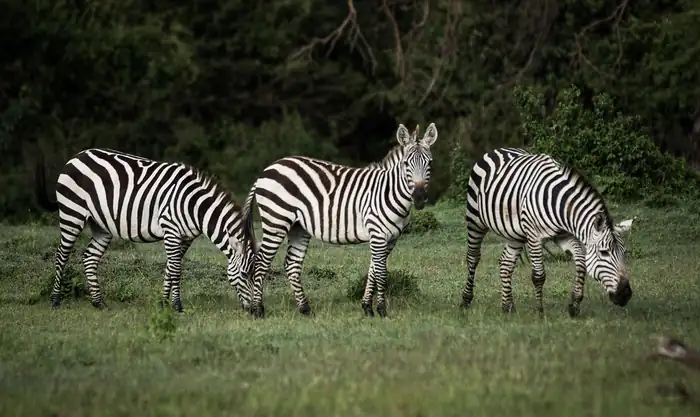
3-Day Masai Mara Safari
The short-trip advantage in action: two full days in the reserve on our most popular itinerary, by road from Nairobi.
From $450 per person
View 3-Day Itinerary
Masai Mara vs Serengeti is a choice between two halves of one great ecosystem. Here is an honest comparison of cost, access, timing and trip length — and which side suits your safari.
Last updated:
The Maasai Mara National Reserve and Serengeti National Park are one continuous ecosystem split by the Kenya–Tanzania border, and the animals do not carry passports. Lion, leopard, cheetah, elephant, buffalo and the two-million-strong wildebeest migration all move freely between the two. You will not see a "better" class of wildlife on either side. What genuinely differs is logistics, timing and budget: the Mara is smaller, closer to a capital city and cheaper to reach for a short trip; the Serengeti is nearly ten times larger, further from Tanzania's main gateways, and rewards longer, more expensive circuits. Choose based on how many days you have, when you're travelling and what you want to spend — not on the myth that one park has the animals and the other doesn't.
| Factor | Maasai Mara | Serengeti |
|---|---|---|
| Country | Kenya (Narok County) | Tanzania |
| Size | ~1,510 km² — compact, dense game viewing | ~14,750 km² — vast, spread-out wilderness |
| Access from a capital | 5–6 hrs by road from Nairobi, or 45–60 min from Wilson Airport | Long drive or internal flights from Arusha/Dar es Salaam; more travel time |
| Typical cost level | Lower for equivalent trips — short transfers keep prices down; group trips from $450 | Higher — longer transfers, internal flights and multi-day circuits push costs up |
| Migration months | Roughly July–October | The rest of the year, with calving in the south around January–February |
| Minimum useful trip length | 3 days is a genuinely complete safari | Realistically 5–7+ days to justify the travel and cover the distances |
Summary: the Mara wins on access, cost and short itineraries; the Serengeti wins on sheer wilderness scale and long game-viewing circuits. Neither wins on wildlife — it's the same wildlife.
You have limited time. This is the Mara's trump card. Because the reserve is 5–6 hours by road from Nairobi — or under an hour by light aircraft from Wilson — a 3-day safari delivers two full days of game viewing plus the journey, and you can be back at Jomo Kenyatta International Airport for an evening flight home. There is no realistic Serengeti equivalent of that itinerary: by the time you have reached the good game areas, a three-day window has largely evaporated in transit.
You're watching the budget. Shorter transfers, a mature network of camps at every price level and strong competition among Kenyan operators keep Mara prices honest. Group joining departures on our budget safari start from around $450 per person all-inclusive — a figure that simply doesn't exist for a comparable Serengeti trip once you account for getting there. Park fees are also seasonal in the Mara: $100 per adult per day from January to June, rising to $200 from July to December, so low-season travellers save further.
You want the migration between July and October. The herds are in the Mara during these months, and this is when the famous Mara River crossings happen. If your holiday falls in the northern-hemisphere summer, the Mara is where the spectacle is — no debate required.
You're combining safari with the beach. Kenya's coast pairs naturally with the Mara: fly or travel up from the coast, do your game drives, and return to the Indian Ocean. Our safari from Mombasa exists precisely for this combination, and it's a far simpler piece of logistics than bolting a beach onto a Tanzanian circuit.
Fairness matters here, because the Serengeti is magnificent. If you want the calving season, the southern Serengeti around January–February is the place: hundreds of thousands of wildebeest calves born in a few short weeks, with predator action to match. The Mara has no equivalent at that time of year.
If you have a week or more, the Serengeti's scale becomes an asset rather than a cost. At roughly 14,750 km² it swallows its visitors, and a well-planned circuit — often combined with the Ngorongoro Crater — can go days at a stretch through changing landscapes with a genuine sense of remoteness that the more compact, busier Mara cannot match in peak season. Long Tanzania circuits are some of the finest safaris in Africa; they are simply a different product, at a different price, for travellers with more time.
If wilderness scale matters more to you than convenience — if the point of the trip is to feel small in an enormous landscape — the Serengeti's endless plains are the stronger canvas. Be honest with yourself about whether you'll have the days (and budget) to use it.
Yes, and border-area itineraries or flight connections between the two parks do exist. But go in with eyes open: there is no tourist road crossing between the Mara and Serengeti themselves, so combining them means routing through official border points or flying, plus two visas, two sets of park fees and two operators' logistics. It's a wonderful trip for those with two weeks and a generous budget; for most travellers, picking one side and doing it properly is better value than doing both in a rush.
We specialise in Kenya. Our guides, vehicles, camp relationships and pricing knowledge are on the Kenyan side of the ecosystem, which is why every package on this site — from the budget group departures to the fly-in options — is a Mara itinerary we can stand behind in detail. If your dates and budget point to Tanzania, we'll tell you so honestly rather than sell you the wrong trip.
Tell us your dates, group size and budget — we'll reply on WhatsApp with a Mara itinerary that fits, or tell you plainly if your dates favour Tanzania.
Related reading: whether to stay in the reserve or a private conservancy.
The short-trip advantage in action: two full days in the reserve on our most popular itinerary, by road from Nairobi.
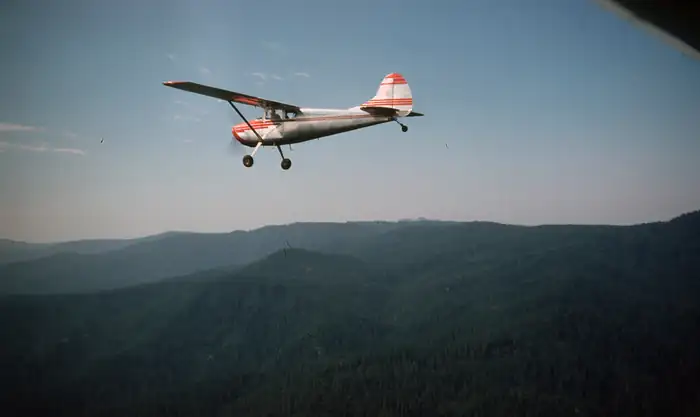
Skip the drive entirely — 45–60 minutes from Wilson Airport to the Mara airstrips, with maximum time on game drives.