 Masai Mara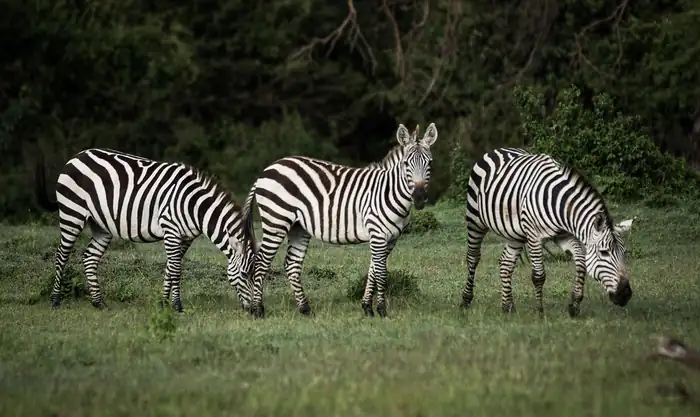
3-Day Masai Mara Safari
The classic shorter itinerary — one full day in the reserve, ideal outside migration season or on a tighter schedule.
From $450 per person
View 3-Day Itinerary
A 4-day Masai Mara safari from Nairobi is the migration-season choice, with two uninterrupted full days in the reserve and time in the Mara River sector when herds are crossing.
One question decides between the 3-day and 4-day Masai Mara safari: do you want to watch wildebeest cross the Mara River? On a 3-day trip, your single full day has to cover the whole reserve — big cats in the morning, a river visit at midday, and back across the plains before dark. The 4-day itinerary splits that work in two. Day 2 handles the classic circuit; Day 3 belongs entirely to the Mara River sector, where crocodiles wait below the banks and, between July and October, the migration herds gather to cross.
River crossings cannot be scheduled — the herds mass on the bank, hesitate, sometimes for hours, and then pour across in minutes. The only honest strategy is time in position, and a dedicated river day roughly doubles yours compared with the 3-day route. Outside migration season the fourth day still earns its keep: photographers get golden-hour light on two consecutive full days, and families appreciate an itinerary that never has to rush a sighting because the clock says so.
The journey itself is unchanged from our other road packages: 5–6 hours from Nairobi covering roughly 250 km, down the Rift Valley escarpment and through Narok. Prefer to skip the drive? Scheduled flights from Wilson Airport reach the Mara airstrips in 45–60 minutes — ask for a flying version of this itinerary when you request your quote.
The extra night also creates room to explore different habitats instead of repeating one circuit. Open savannah, acacia woodland, seasonal streams and the Mara River support distinct combinations of grazers, browsers and predators.
Resident wildlife includes lion, leopard, cheetah, spotted hyena, elephant, buffalo, giraffe and several antelope species. Zebra and wildebeest remain in the ecosystem outside the main migration months, so rewarding game viewing is not limited to river-crossing season.
Accommodation ranges from budget tented camps near an entry gate to mid-range and luxury properties inside the reserve or adjoining conservancies. Your itemised proposal names the property, room type and meal plan before booking.
Hotel or airport pick-up between 7:00 and 8:00 am, then the road south-west: a photo stop above the Great Rift Valley, lunch around Narok or at camp, and arrival at the reserve by early afternoon. After check-in, your first game drive begins around 4:00 pm — the hour when elephant families move to water and lions begin to stir. Dinner and overnight at your camp or lodge.
Out at first light with a packed breakfast and picnic lunch, covering the central plains and whichever sectors your guide's radio network says are producing: cheetah on the open grassland, lion prides at their kills, elephant, buffalo and — with luck — leopard along the wooded riverlines. Because you carry lunch with you, there is no midday return to camp and no wasted driving. Back at camp by sunset for dinner and overnight.
The day the 4-day itinerary is built around. In migration season (July–October) your guide positions the vehicle near the crossing points and reads the herds — when wildebeest begin funnelling towards the bank, you wait, engines off, for the plunge. Outside those months the river still delivers: resident hippo pods, giant Nile crocodiles and the game-rich country along the western reaches. Optional start to the day: a hot-air balloon safari at dawn (approximately $450 per person, booked ahead), landing to a bush breakfast before rejoining your vehicle. Dinner and overnight at camp.
A final dawn drive — often the trip's best cat sightings, as predators finish the night's business — then breakfast and the road back. Expect to reach Nairobi by late afternoon, with drop-off at your hotel or the airport; evening international departures connect comfortably. En route, an optional stop at a Maasai village (about $25–30 per person, paid locally) can be arranged if you missed it earlier.
The road route normally enters through the gate serving the confirmed camp. Sekenani, Talek and Oloolaimutia are common access points, while western properties may use a different approach.
A professional driver-guide plans each outing around recent sightings, weather and track conditions. Radio updates help locate activity, but no particular animal encounter can be guaranteed.
Game drives use a pop-up-roof safari van or 4x4 Land Cruiser. The roof gives each passenger a clear viewing position while keeping everyone safely inside the vehicle.
Bring binoculars, spare camera batteries and a light layer for dawn departures. Soft-sided luggage is easier to store than rigid suitcases, especially on shared vehicles and light-aircraft transfers.
Full board generally covers breakfast, lunch and dinner from lunch on Day 1 through breakfast on Day 4. Picnic meals are used when returning to camp would interrupt the wildlife-viewing route.
Vegetarian, vegan and allergy-related meals can usually be arranged with advance notice. Share dietary needs before the accommodation is confirmed so the kitchen can prepare properly.
Drinking water is provided in the vehicle. Personal beverages, laundry, gratuities and optional activities remain separate unless they appear explicitly in your written quotation.
| Option | Low Season (Jan–Jun) | High Season (Jul–Dec) | Accommodation |
|---|---|---|---|
| Group joining — budget camp | from $560 | from $820 | Budget tented camp, en-suite |
| Private safari — budget camp | from $780 | from $1,050 | Budget tented camp, en-suite |
| Private safari — mid-range | from $1,150 | from $1,500 | Mid-range lodge/tented camp |
| Private safari — luxury | from $2,000 | from $2,800 | Luxury camp or lodge |
Prices are indicative per person sharing a double/twin, based on 2 travellers for private options, and include park fees for 3 park days ($100/adult/day Jan–Jun; $200 Jul–Dec). Exact price depends on dates, group size and camp availability — request a quote for an itemised figure.
Group joining lowers the per-person cost by sharing transport and following fixed pickup times. It is commonly chosen by solo travellers and couples who are comfortable travelling with others.
A private vehicle gives your party control over comfort stops, photography time and the pace of each drive. It can be particularly valuable when waiting near the river or travelling with children.
The final amount reflects season, vehicle type, room category, party size and current park charges. We confirm availability and explain each line item before any payment is requested.
This itinerary earns its premium in July to October, when the wildebeest migration is in the Mara and the river sector is the most dramatic wildlife theatre in Africa. Camps near the reserve fill early in these months, so book two to three months out and expect high-season park fees of $200 per adult per day. January and February offer dry weather, short grass and superb resident predator viewing at half the park fee. The April–May green season brings storms, empty tracks and the year's lowest prices — a 4x4 Land Cruiser is strongly advised then, as the black-cotton soil turns to glue after rain.
The Great Migration follows rainfall and grazing conditions, not a fixed calendar. A crossing may happen suddenly or not at all during a particular visit, even when herds are gathered near the river.
June and November can provide a quieter transition between peak periods, while the green season rewards birdwatchers with migratory species and dramatic skies. Current camp access matters as much as the month.
Group joining keeps costs down by filling each vehicle with up to seven travellers on a fixed schedule — a good fit for solo travellers and couples watching the budget. A private safari costs more but lets you decide, on the spot, to sit at a crossing point for four hours — worth considering in migration season, when patience is the whole game. Full details on how shared departures work are on our group joining safari page.
Children are welcome, although room occupancy rules and child rates vary by property. Include every child's age in the inquiry so suitable camps and vehicle arrangements can be checked.
Comprehensive travel insurance is recommended for medical treatment, cancellation and baggage disruption. Kenya entry documents and international flights are the traveller's responsibility.
Tell us your dates and group size — we'll reply on WhatsApp with an itemised price and the exact camp you'd stay in.
The classic shorter itinerary — one full day in the reserve, ideal outside migration season or on a tighter schedule.
Group joining departures and budget tented camps — the cheapest way into the Mara without cutting game drives short.