 Masai Mara
Masai Mara Budget Safari
Group joining departures with budget tented camps — the cheapest honest way to see the Mara, with park fees included and nothing hidden.
From $450 per person
View Budget Safaris
Masai Mara safari cost ranges from $450 group joining trips to $3,500 fly-in luxury. Here are honest, itemised numbers showing what drives the price and where hidden costs sit.
Last updated:
A Masai Mara safari costs between $450 and $3,500 per person for a typical 3–4 day trip, depending almost entirely on how you travel and where you sleep — not on what you'll see. Everyone drives the same Maasai Mara National Reserve. The table below shows realistic all-inclusive ranges per person sharing, covering transport from Nairobi, accommodation, full-board meals, game drives and park fees.
| Safari Style | Realistic Range (3–4 days, per person sharing) | What You Get |
|---|---|---|
| Budget group joining | $450–$650 | Shared vehicle, budget tented camp outside the gates |
| Private budget | $650–$1,050 | Your own vehicle and schedule, budget camp |
| Mid-range | $900–$1,500 | Private 4x4, comfortable tented camp or lodge |
| Luxury | $1,600–$2,800 | Premium camp or lodge, private 4x4, top guides |
| Fly-in | $1,400–$3,500 | Wilson Airport flights, in-reserve camp, shared 4x4 drives |
Ranges reflect low season (January–June) at the bottom and high season (July–December) at the top. Solo travellers may pay single supplements at some camps in high season.
Park fees and season. Non-resident entry to the Maasai Mara National Reserve costs $100 per adult per day from January to June and $200 per adult per day from July to December. That seasonal split alone moves a 3-day trip by $200 per person before anything else changes — it is the single biggest reason the same itinerary costs more during the July–October migration months.
Accommodation tier. A budget tented camp outside the Talek or Sekenani gates, a mid-range camp, and a luxury lodge inside the reserve can differ by hundreds of dollars per night. The beds change; the lions do not.
Private versus shared vehicle. Group joining departures split the vehicle, fuel and guide across up to seven travellers, which is why our group joining safaris undercut private trips by $200 or more per person. A private vehicle buys flexibility — your own game-drive hours, photography stops, no compromise on routes — at a real cost.
Road versus air. The drive from Nairobi takes 5–6 hours; the flight from Wilson Airport takes 45–60 minutes. Flying typically adds several hundred dollars return per person, which is why a fly-in safari starts around $1,400 while a road trip of similar camp standard costs meaningfully less.
Trip length. Every extra day adds a park-fee day plus a night's accommodation and meals. Three days covers the classic highlights for most visitors; four days earns you a full uninterrupted day in the reserve.
Take a 3-day group joining safari in low season — the cheapest genuine way to see the Mara. Here is a rough itemisation of what the operator must cover per person:
| Cost Item | Approximate Share (per person) |
|---|---|
| Park entry fees — 2 days inside the reserve at $100/day (low season) | $200 |
| Transport share — Nairobi return, vehicle, fuel, driver-guide (split across the group) | ~$100–120 |
| Budget tented camp — 2 nights full board | ~$100–120 |
| Operator overheads, booking and support | Remainder |
Figures are indicative shares, not a formal invoice — but they show why roughly $450 is the honest floor.
Add those lines up and there is very little margin left at $450. That is precisely the point: park fees alone consume nearly half the price. Any quote dramatically below this level is not a bargain — it is a quote that has quietly removed park fees, meals or the Nairobi transfer, and you will pay the difference at the gate or in "extras" later. If a price looks too good, ask for it itemised line by line. A genuine operator will happily oblige; see our budget safari page for what a fully inclusive cheap trip looks like.
The reliable savings levers are simple. Travel January to June, when park fees halve and camps discount. Join a group departure rather than booking privately — our group joining safaris run most days from Nairobi and deliver the same reserve at the lowest per-person cost. Keep the trip to three days, sleep outside the gates, and go by road. Our budget safari guide covers seven concrete ways to cut the price without cutting the experience.
Paying more makes sense in three situations. If your dates are fixed to July–October for the migration, high-season pricing is simply the cost of the spectacle — book early rather than cheap. If you are travelling for a honeymoon or a milestone, an in-reserve camp changes the trip: you wake to the sounds of the Mara instead of driving in each morning, and a luxury safari from $1,600 buys genuinely better guiding, food and privacy. And if you are short on time or averse to long drives, flying from Wilson Airport converts twelve hours of road into two hours of flying — worth every dollar to some travellers, an unnecessary expense to others.
The honest summary: decide what you value — time, comfort, or money — and pick the style that matches. The wildlife is identical at every price point.
Tell us your dates, group size and style — we'll reply on WhatsApp with a line-by-line price so you can see exactly where every dollar goes.
Group joining departures with budget tented camps — the cheapest honest way to see the Mara, with park fees included and nothing hidden.
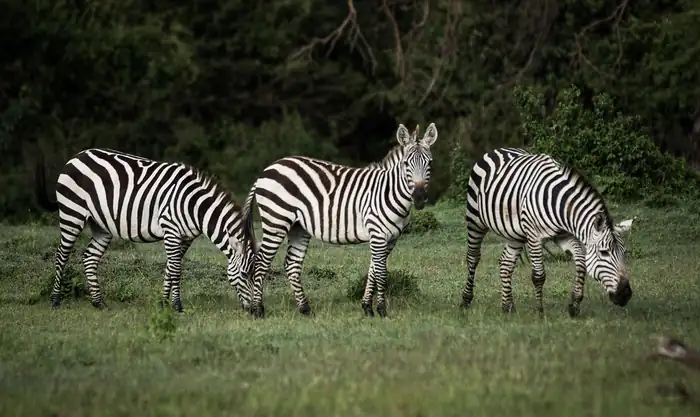
The full day-by-day itinerary behind our most popular departure — including private and mid-range upgrade options.